
On Believing Her
I recently launched a coaching service for disabled professionals. This is why.

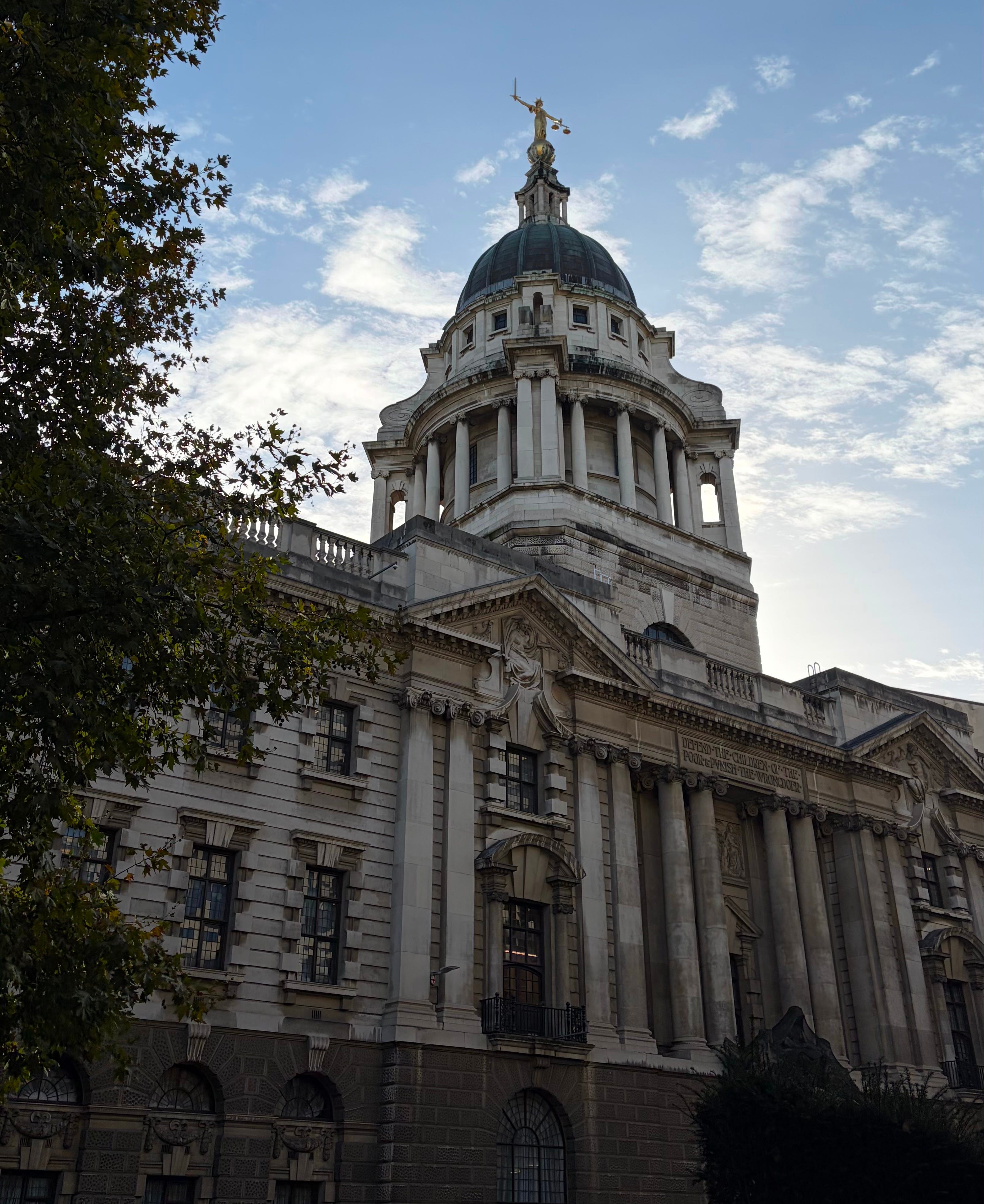
I was at university, doing a mini pupillage, spending five days shadowing a criminal barrister at court. I didn’t see chambers. I didn’t see the preparation, the case-building, the ordinary nature of the work. I was based entirely in the courtroom and the corridors outside it, which meant that the version of the profession I was looking at was almost entirely performance: the wig, the address, the careful construction of an argument in front of a judge.
I knew what I wanted. I had known for a while. I wanted to be a barrister, specifically in human rights. Not criminal law, which is where I was spending my week, but I wasn’t worried about the distinction. What I was interested in was the form of it: the argument, the logic, the particular kind of attention that advocacy requires. I had always found that work easy in a way that felt meaningful rather than just convenient. I was good at constructing a case. I was comfortable in front of people. I wanted to use that for something. And we all know I love putting on a show!
At the time, I wasn’t identifying as disabled. I used a wheelchair. But that framing, disabled, wasn’t one I had yet applied to myself in any deliberate way. It wasn’t how I moved through the world in my own understanding of it.
The conversation
The conversation happened mid-week, I think. The barrister I was shadowing asked about my plans, and I told her. All of it. What I wanted to do, why I wanted to do it, what I hoped to use it for. I remember feeling clear. I wasn’t uncertain.
Her response was that she didn’t think the barrister route was right for me.
She explained that, in her experience, success at the bar required being the first person into chambers in the morning and the last to leave in the evening. That was how you demonstrated commitment, built a reputation, and progressed. She presented this as honesty. She also said that, given the kind of barrister I wanted to be, I wouldn’t be able to meet those expectations.
It was a quiet moment. I don’t remember it as confrontational or unkind. It had the tone of a door being gently closed rather than slammed, which is possibly the thing that made it so effective. There was no drama to push against. There was just a calm, experienced professional explaining how things worked.
I thanked her and didn’t ask any questions. I remember thinking she was being kind. That she understood me and the lawyer I wanted to be.
I didn’t pursue becoming a barrister after that.
Why I believed her
She had done the job. She had moved through the profession. She had information I didn’t have, and she was offering it to me. The most obvious thing to do was accept it.
I was twenty, or thereabouts. She had decades of experience. In that room, the logic of trusting her was almost automatic.
What I didn’t understand then, and what took a long time to understand properly, was that what she was telling me may have been true, and not the whole of it. She was describing her experience, her route through a specific set of professional cultures, her understanding of what success required. All of that was probably accurate, for her, in the contexts she had moved through. What it wasn’t was a complete account of the profession. It wasn’t the full range of what was possible. It was one person’s experience, presented as the mould everyone fits into.
I had no reason to know the difference. I had no disabled barrister to compare her account against. I didn’t know whether any disabled people practised at the bar, or how, or what adjustments they might have made or fought for. I didn’t think to ask. The phrase ‘reasonable adjustments’ was not part of my vocabulary in any practical sense. I had no framework for questioning a model of success that was built entirely around physical presence and visible hours, because I had never been offered a different model.
The authority wasn’t just hers. It was the authority of a world I hadn’t yet seen enough of to have any counter-information.
What the conversation didn’t contain
I have spent some time trying to understand what she thought she was doing, and I think she thought she was helping. That’s a recognisable form of care. It doesn’t always land that way.
What it assumed, though, was that she understood my situation well enough to make that call. That the barriers she was describing were fixed rather than structural. That the question of whether I could do the job had already been answered, rather than being something I might have spent a career finding out.
Disability was part of that conversation. It was there in the subtext of everything she said about hours and presence and commitment. But neither of us had the language for it. She was speaking from outside any lived experience of disability, and I was speaking from a position where I hadn’t yet accepted that I had any. We were both, in different ways, talking around something neither of us could name.
What that meant, in practice, was that the working culture she was describing was presented as if it were the job itself. It wasn’t. It was the habit of a particular professional world, the way things had always been done, the unexamined standard. Neither of us had the tools to see that distinction. She couldn’t offer what she didn’t have, and I didn’t know there was anything missing.
That absence is quiet. It doesn’t announce itself. You don’t leave thinking something was missing. You just leave thinking the door isn’t open.
The regret
This is the biggest regret of my career. Not because I chose a different path, and not because I am unhappy with the career I have built. I’m not. But because I made that decision based on one person’s perspective, at the very first hurdle, without the full picture.
I think I would have been a good barrister. I wish someone had encouraged me to find out.
I didn’t try and fail. I didn’t explore the bar and decide it wasn’t for me. I stopped at the first real conversation I ever had about it, with someone who was confident and authoritative and, as it turned out, working from a partial picture. I made a long-term decision based on one data point, and I didn’t know that’s what I was doing.
What I know now
What I know now is that the information existed. There are disabled barristers. There were people navigating the profession differently, making adjustments, finding routes I never knew to look for. None of that was in the room during that conversation, and I didn’t have the knowledge to bring it in.
I think about that when I’m working with disabled people at similar crossroads. Not because I can make the decisions for them, but because I know what it costs to make a significant choice without the full picture. The conversation I didn’t have is the one I try to offer.
Decisions made early tend to feel foundational. You build from them. You adjust to them. You forget, sometimes, that they were decisions at all rather than facts. And the ones made on incomplete information don’t usually announce themselves as such. They just become the shape of your life.
Definitely write that book!